Description
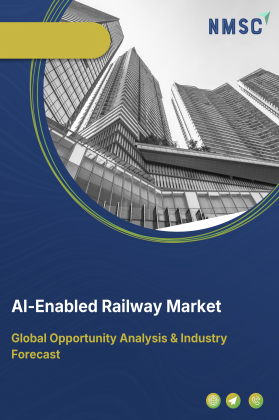
The global AI-enabled railway market encompasses the integration of artificial intelligence technologies into rail transportation systems to enhance operational efficiency, safety, and passenger experience. These systems combine data-driven algorithms with rail infrastructure and rolling stock to enable real-time monitoring, predictive decision-making, and automation across railway operations. AI-enabled railways represent a key pillar in the evolution toward intelligent, connected, and autonomous transportation networks.
The market is segmented across multiple dimensions. By component, it includes hardware, software, and services, reflecting the layered architecture of AI-driven railway systems. By technology, the market covers a range of artificial intelligence capabilities such as machine learning, computer vision, natural language processing, and advanced analytics, each supporting different operational functions within rail environments. By deployment, solutions are implemented through cloud-based and on-premise systems, enabling varying levels of scalability, integration, and data management. By train type, the market spans multiple rail categories, from urban transit systems to high-speed and freight operations, each with distinct operational requirements. By application, the market includes predictive maintenance, safety and security, operations management, and other use cases that leverage AI to optimize performance and reliability.
Geographically, the market reflects differing levels of digital maturity, infrastructure readiness, and investment in smart transportation systems. Some regions are characterized by advanced adoption of AI-driven rail technologies supported by large-scale infrastructure programs, while others are in earlier stages of digital transformation. Regional variation plays a significant role in shaping adoption patterns, regulatory frameworks, and long-term development strategies.
Key factors influencing the market include increasing demand for intelligent transport systems, growing emphasis on safety and operational efficiency, and ongoing investment in digital infrastructure and automation. At the same time, the market faces challenges related to system integration with legacy infrastructure, regulatory complexity, and the need for specialized technical capabilities. Emerging opportunities are associated with advancements in autonomous train operations, real-time data analytics, and the expansion of AI-driven solutions across the rail value chain. AI adoption is rapidly moving from pilot projects toward scalable, enterprise-level implementations across railway operations.
As a recurring publication, this study provides a consistent analytical framework for evaluating structural developments and technological evolution within the AI-enabled railway market. It supports longitudinal comparison and strategic assessment across components, applications, and regions.